
Vitrification has transformed fertility treatment. It allows surplus embryos to be stored, makes freeze-all strategies possible and supports oocyte cryopreservation for fertility preservation. Its success depends on precise technique at every step, from cooling to warming and long-term storage.
What vitrification does
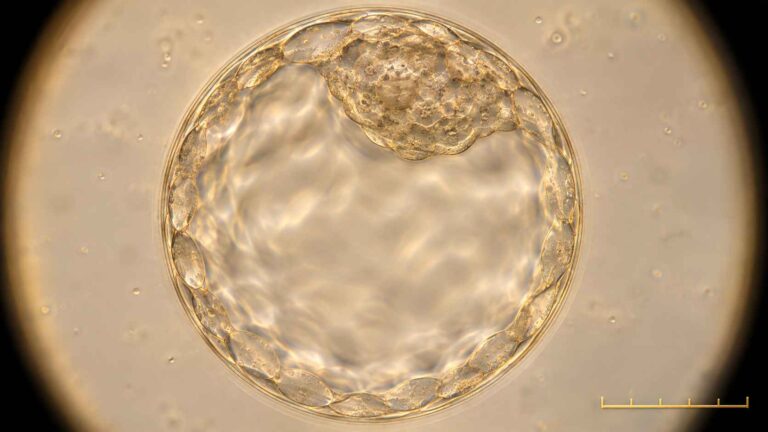
Vitrification cools cells so rapidly, in the presence of cryoprotectants, that the water inside them solidifies into a glass-like state instead of forming damaging ice crystals. Achieving this requires high cryoprotectant concentrations, very small volumes and very fast temperature change.
Critical steps in the protocol
- Cryoprotectant exposure. Cells are moved through equilibration and vitrification solutions for carefully timed periods. Too short risks ice formation; too long increases toxicity.
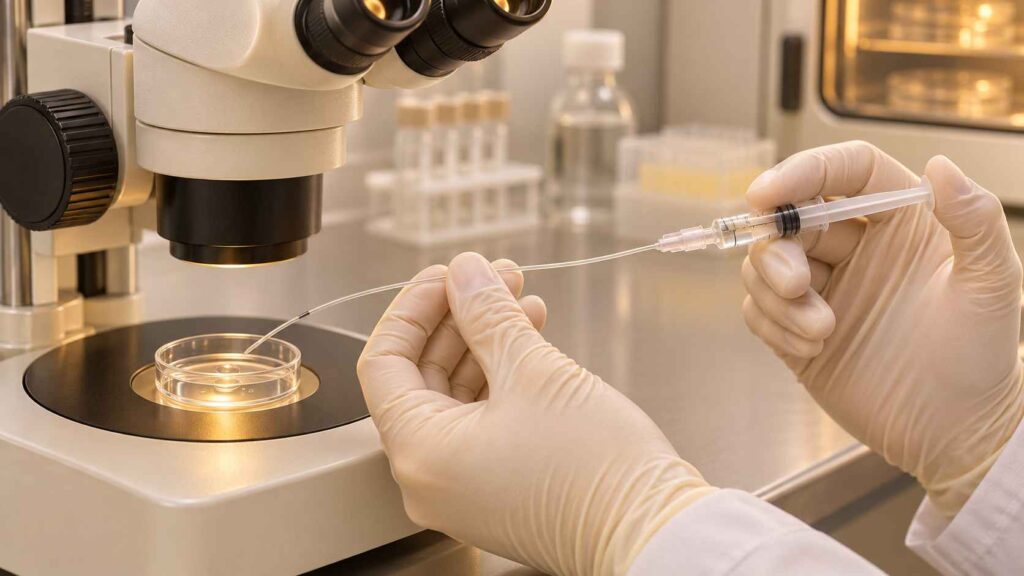
- Minimal volume. The specimen is loaded onto the carrier in the smallest practical volume of solution.
- Carrier choice. Open devices allow direct contact with liquid nitrogen and very fast cooling; closed devices add a physical barrier against contamination. Laboratories should validate whichever system they use.
- Warming. Rapid warming is at least as important as rapid cooling. Warming solutions and timings should follow the validated protocol exactly.
Cryostorage safety
Every stored oocyte or embryo represents a patient’s future treatment. Storage systems therefore need continuous liquid-nitrogen level monitoring with alarms, regular manual checks, clear inventory records, secure labelling and documented consent for storage duration. Emergency procedures for tank failure should be written and rehearsed.
Monitoring quality
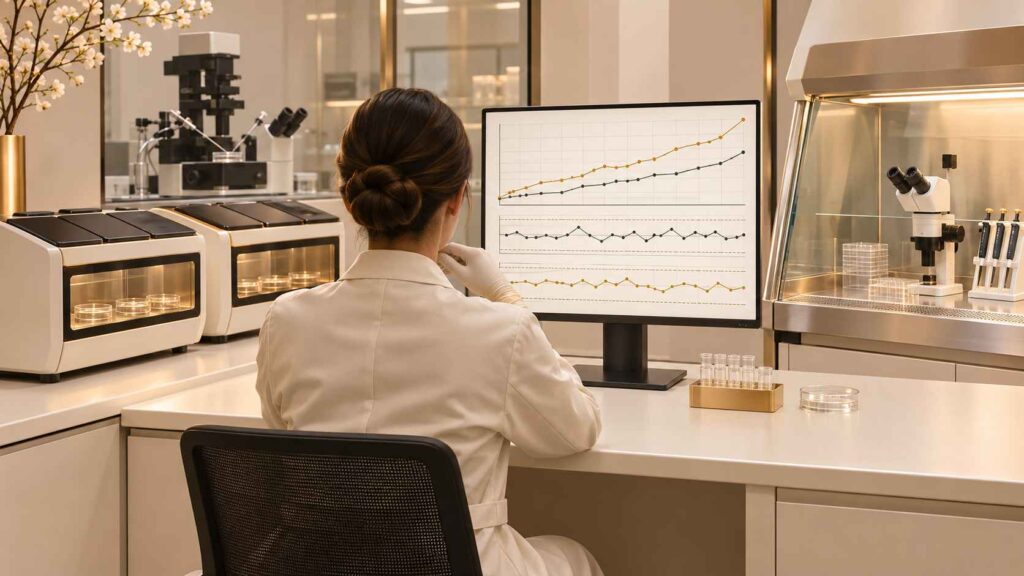
Survival after warming is a key indicator of vitrification performance. Laboratories should track survival rates for oocytes and embryos separately, by embryologist and by device batch where possible, and investigate any decline promptly.
Training and competency
Vitrification and warming are manual skills. New staff should train on non-clinical material, be assessed against defined competency criteria and be re-assessed periodically.
Key takeaways
- Vitrification avoids ice formation through rapid cooling with cryoprotectants in minimal volume.
- Exact timing of cryoprotectant exposure and rapid warming are critical.
- Cryostorage needs continuous monitoring, accurate inventory and rehearsed emergency plans.
- Post-warming survival is the main quality indicator for a vitrification programme.
Educational content only. This article does not replace institutional protocols, manufacturer instructions, clinical judgement or local regulatory requirements.
References and further reading
- ESHRE Guideline Group on Good Practice in IVF Labs. Revised guidelines for good practice in IVF laboratories. Human Reproduction. 2016.
- ESHRE Special Interest Group of Embryology and Alpha Scientists in Reproductive Medicine. The Vienna consensus on ART laboratory performance indicators. 2017.
- Manufacturer instructions for the vitrification and warming system in use.