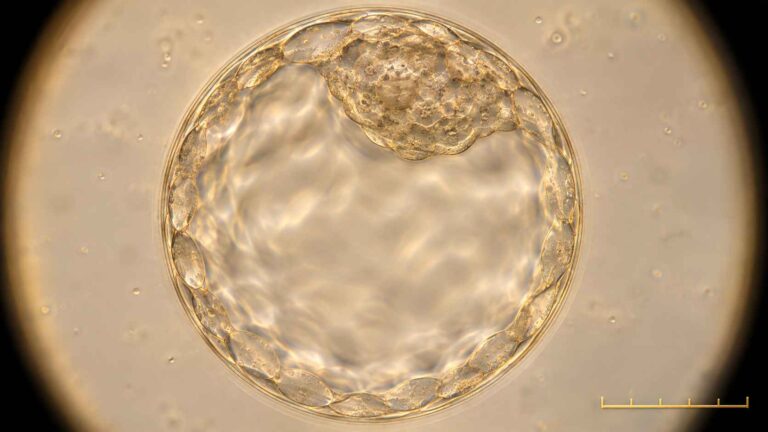
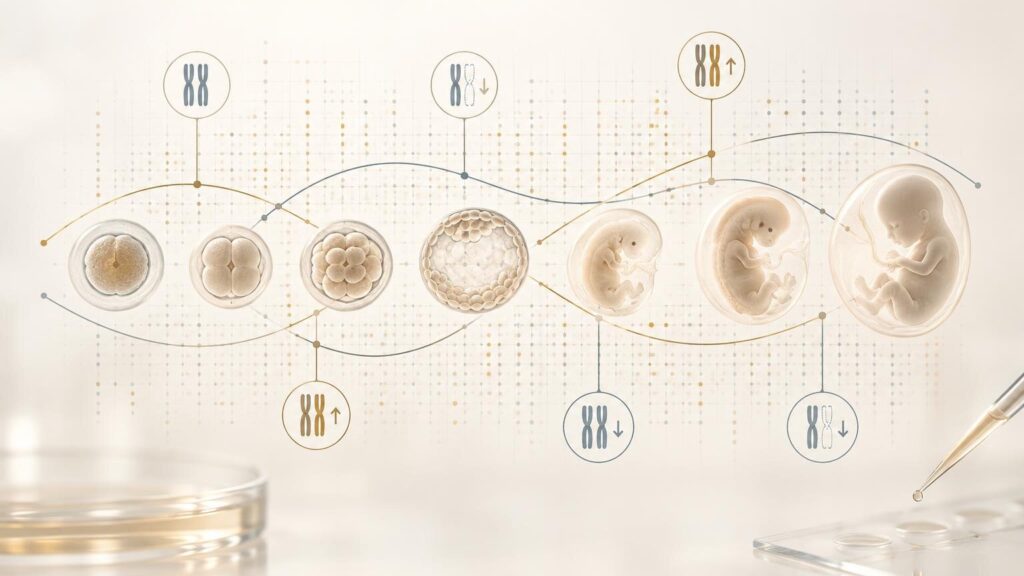
A large-scale analysis examined morphokinetic trajectories from 11,915 blastocysts and identified patterns that the authors attribute to specific aneuploidies affecting preimplantation development. The work focuses on developmental timing and trajectory differences associated with chromosomal status rather than clinical outcomes.
The report is set against a backdrop in which live birth per embryo transfer remains low in many settings and aneuploidy is recognised as a key biological obstacle. Chromosomal abnormalities are common in human embryos, become more frequent with increasing maternal age, and large PGT‑A datasets indicate whole chromosome gains and losses — including trisomies and monosomies — are the predominant abnormalities.
By combining a very large morphokinetic dataset with chromosomal information, the study provides population-level observations about how different aneuploidies relate to early developmental dynamics, offering a resource for laboratory research and further methodological work.
Why it matters: Linking chromosomal status to morphokinetic trajectories at scale may improve understanding of aneuploidy effects on early embryo development and inform further research and assessment approaches.
Source: Reproductive BioMedicine Online · 12 Nov 2026
This summary was prepared with AI assistance from the source below and is provided for professional information only. Please read the original source before relying on any information. It is not medical advice.